

Idea Lab · Ideas · Creative process

Ideas that are growing right now.

Here I collect ideas and show how they grow: from the first thought through idea sketches to an outline concept. Each idea shows its current stage of development.

Ideas at a glance

From thought to concept.

Stage: Civic engagement

Stadtbild Dulsberg

Two ideas: a food truck in summer and a park café all year round.

Skizze: Igel und Eichhörnchen in einem Park mit Bäumen
Stage: Draft

Igelhörnchen

My own brand project for urban wildlife – with information and tips for adults on how to help hedgehogs, squirrels and the like, and stories for children.

Skizze: Kaffeetasse und eine Person mit Hund an der Leine
Stage: Idea

Dog café by the park

A café for everyone where dogs are welcome. A meeting place with room to meet people and do things together.

Skizze: Porträt im Bilderrahmen und eine Reihe weiterer Rahmen
Stage: In progress

Personal Branding History

What turns people into brands? A series about personalities who became visible long before the term existed.

Skizze: Browserfenster mit Website-Layout, verbunden mit einer Sprechblase mit Funken für KI
Stage: In progress

My website

This website as a practical project: AI-supported concept development, design and implementation – and what I am learning along the way.

More quality of life for Dulsberg · Idea 1

Stage: Civic engagement

A food truck for the neighbourhood.

These two ideas are not a business plan but my commitment to my neighbourhood – I am passing them on to the Dulsberg neighbourhood office as suggestions. There are few places to eat in Dulsberg. My first idea: in summer, a food truck sets up in the park near the Olympic training centre – an easy-going meeting place where neighbours get talking and the neighbourhood gains quality of life.
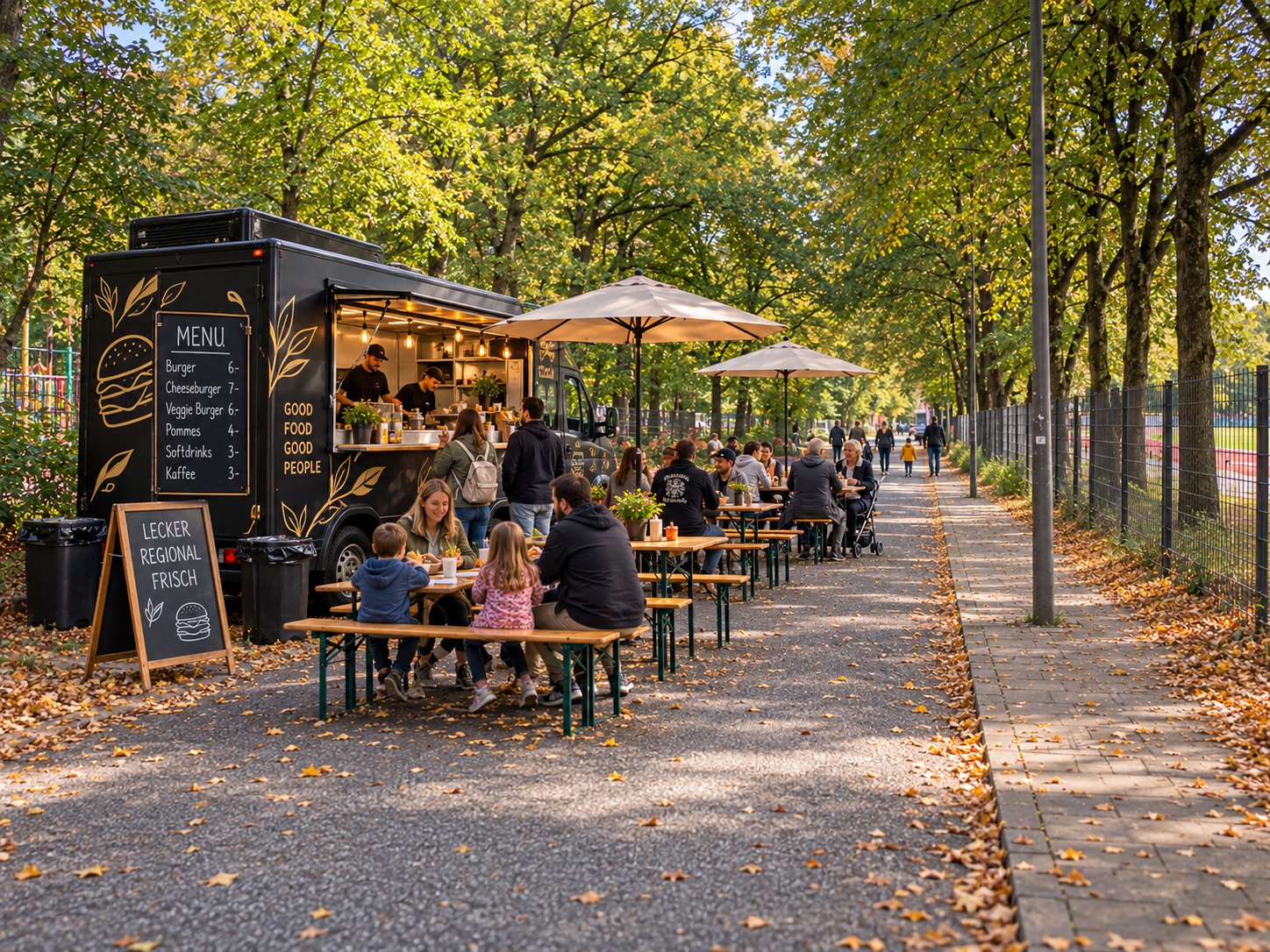
KI-Visualisierung: Foodtruck mit Bierbänken und Sonnenschirmen im Park, Nachbarn sitzen zusammen

AI visualisation of the idea

Where
Dulsberg, near the Olympic training centre (between the playground and the sports ground)
When
May to August: Fridays and Saturdays from 12 noon to 8 pm, Sundays from 12 noon to 6 pm
What
Burgers and sausages, including vegetarian options, plus fries, nachos, ice cream and drinks – at fair prices, also to take away for a picnic in the park
For whom
Walkers and park visitors, families, athletes after training and pupils
Consideration
Fixed closing times and very quiet music so that nobody feels disturbed

Instead of barbecuing yourself, just drop by: good food at a fair price makes the food truck a place to come together and get to know each other.

More quality of life for Dulsberg · Idea 2

Stage: Civic engagement

A park café all year round.

A small park café at the Olympic training centre: a lovely place to wait, arrive and linger – for more quality of life in the neighbourhood, all year round.

Where
At the Olympic training centre in Dulsberg, with a terrace facing the park
When
All year round – outside on the terrace in summer, inside in winter
What
A small, changing menu: coffee and cake, snacks at lunchtime, five to six dishes in the evening – regional, sustainable, healthy and international, at fair prices
For whom
Parents waiting for their children at training, athletes, visitors and staff of the Olympic training centre, physiotherapy patients, pupils, neighbours and park visitors
Extras
Picnic baskets to pre-order – with a deposit; the basket comes back together with the rubbish. Plus catering for events and meetings at the Olympic training centre.

A small menu and a pleasant atmosphere surrounded by greenery: a café that pays its way and makes the neighbourhood more liveable and more lovable.
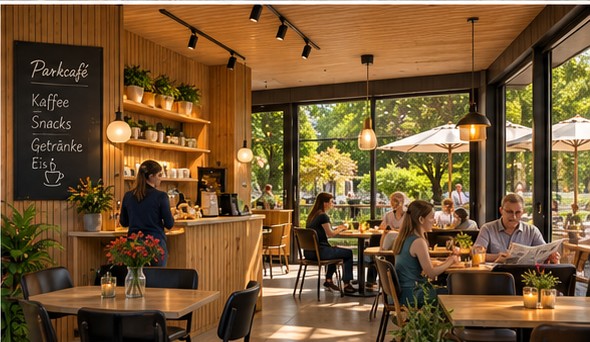
KI-Visualisierung: helles Parkcafé mit Holztheke, Tischen und großen Fenstern zum Park

AI visualisation of the interior – first version

My own idea · Hamburg

Stage: Idea

A dog café by the park.

A café for everyone where dogs are welcome: for breakfast, a coffee or brunch at the weekend. And a meeting place for dog owners, dog trainers and anyone thinking about getting a dog – right by the park, so that training under real conditions can take place next door.

Where
Sasel in the Wandsbek district, around the Saseler Gutspark: lots of dogs, high purchasing power, green space right outside the door and a lively village centre. How I arrived at this choice is explained below.
What
Breakfast, coffee and cake, small snacks and brunch at the weekend. For the dogs: home-baked dog biscuits, also to take away or give as gifts, and dog ice cream in summer, for example liver sausage or minced pork.
Knowledge
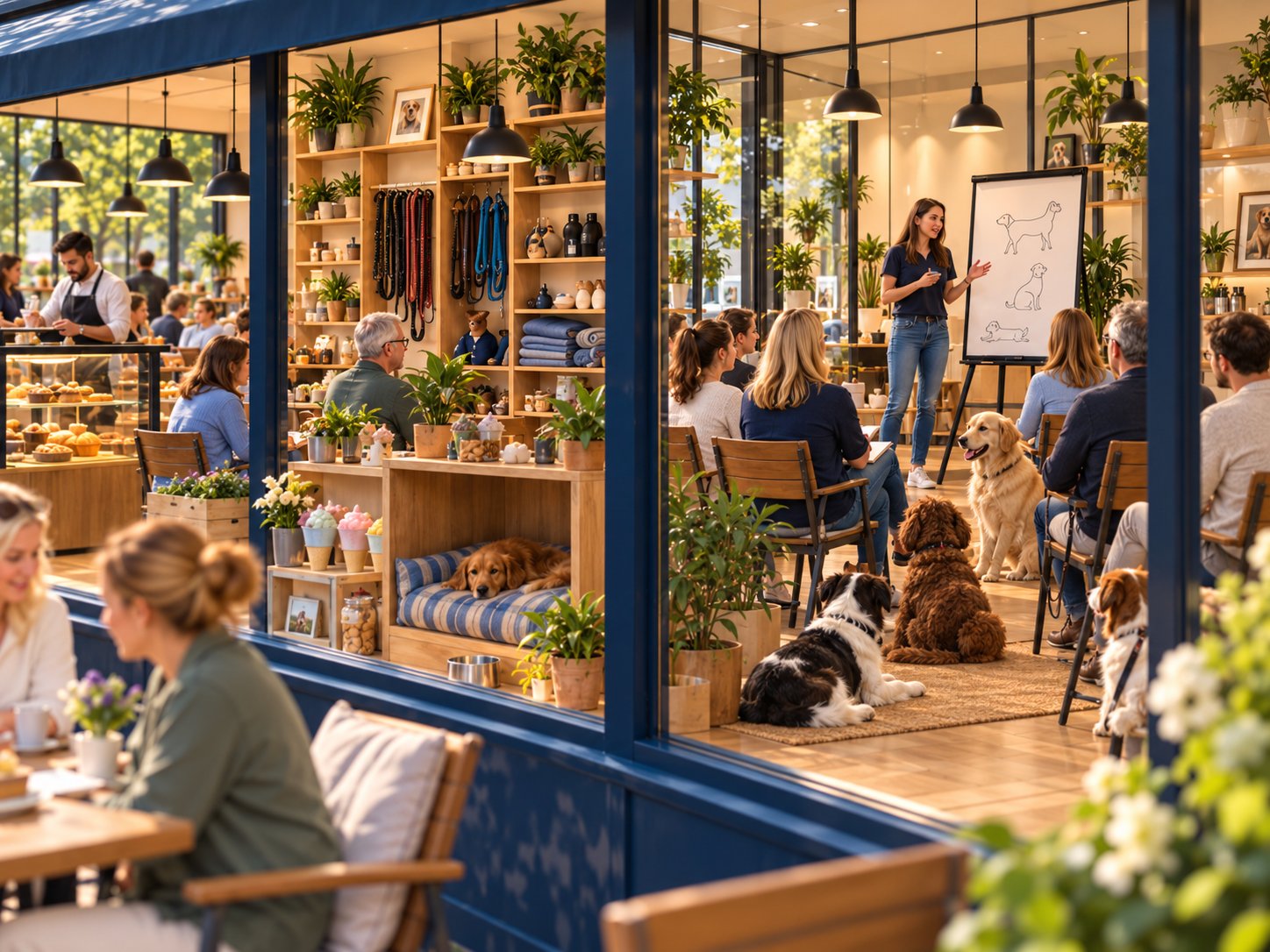
Dog consultation hours with dog trainers by appointment. One or two talks a month, for example on first aid for dogs, dental care or care while you are on holiday. Plus a ten-week New Year’s Eve training course to help dogs cope with fireworks, on site and with online support, and an online check before getting a dog: which dog suits me?
For whom
Dog owners and anyone who would like to become one, dog trainers, neighbours, park visitors and passers-by. Dogs are always welcome – there is a quiet retreat for anxious or excited dogs.
Extras
A small terrace, a shop-in-shop corner for dog supplies with a specialist retail partner and a separate dog grooming salon. The café space can be divided and rented for talks, workshops or celebrations – also by groups that have nothing to do with dogs.

Before this becomes an outline concept, demand, target groups, location, partners and business plan will be tested – step by step.
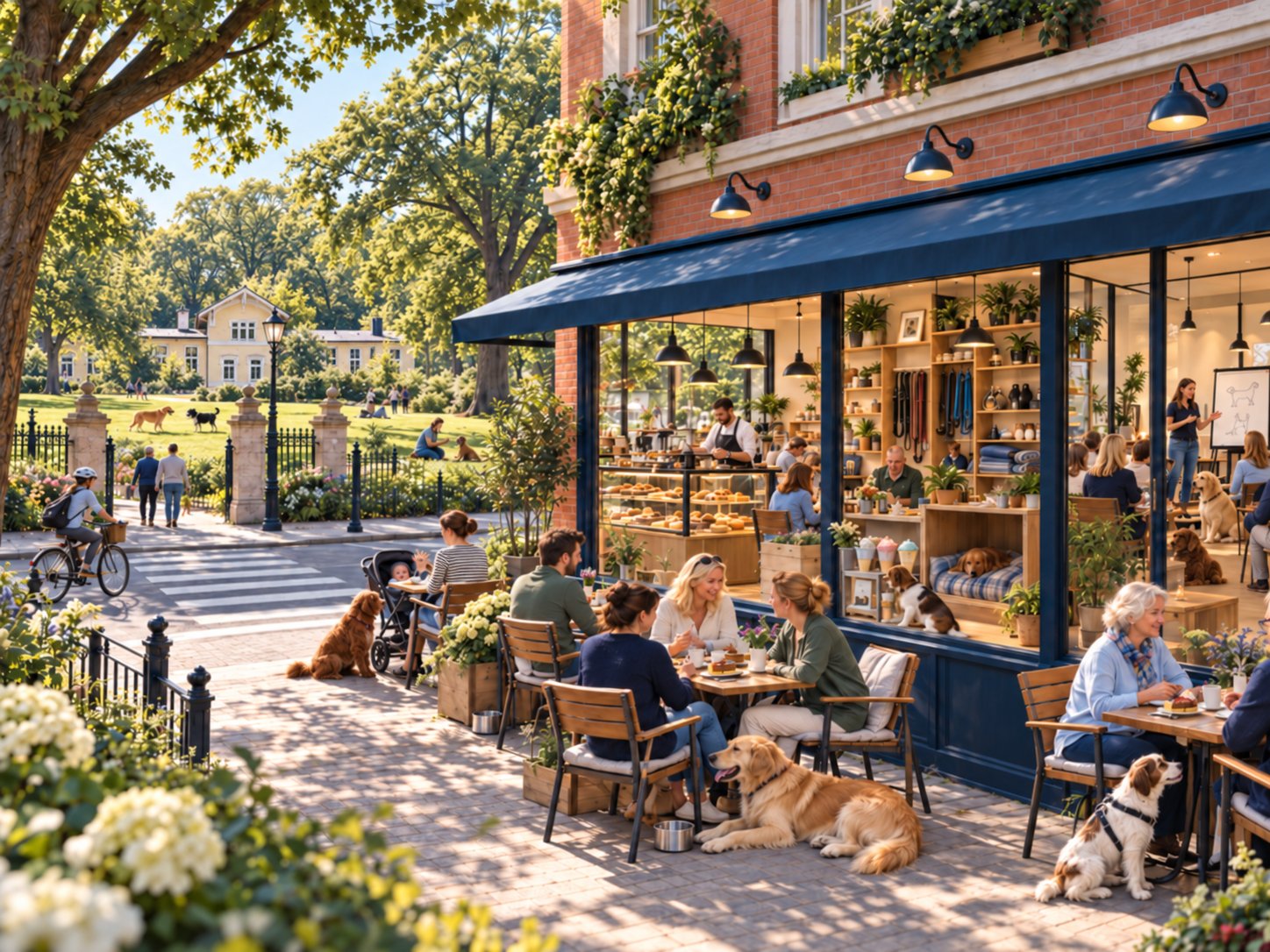
KI-generierte Visualisierung: Hundecafé mit Terrasse, Hunden und Gästen, gegenüber ein Park mit Gutshaus, verbunden durch einen Zebrastreifen
KI-generierte Visualisierung: Innenraum des Hundecafés mit Kuchentheke, Regal mit Leinen und Decken, Rückzugsplatz für Hunde und einem Vortrag am Whiteboard, Zuhörende mit ihren Hunden

AI-generated visualisations of the idea: terrace by the park and interior with a talk

Background · Initial analyses

How I test the idea.

Where do most dogs live?

Hamburg has 106,869 registered dogs (as of 31 August 2026). Most of them live in the Wandsbek district:

  • Wandsbek: 25,490
  • Hamburg-Nord: 17,159
  • Altona: 14,836
  • Eimsbüttel: 13,396
Wandsbek is also far ahead per inhabitant, with a calculated figure of around 56 dogs per 1,000 inhabitants; only Bergedorf is slightly higher. The city does not publish figures by neighbourhood. That is why I combine the number of dogs with purchasing power and green spaces to narrow down the area.
Source: Senate answer to a written parliamentary question, September 2026

Purchasing power: income per taxpayer

The Wandsbek district is large and very diverse. In the north-east, incomes are well above the Hamburg average of €50,727:

  • Wellingsbüttel: €127,297
  • Volksdorf: €79,330
  • Sasel: €78,338
  • Marienthal: €71,113
  • Poppenbüttel: €64,299
For comparison: Wandsbek neighbourhood €37,415, Jenfeld €30,908.
Source: Statistikamt Nord, Hamburg neighbourhood profiles, reporting year 2024 (income 2021)

Green spaces and off-lead areas

In Wandsbek, dogs that have passed an obedience test may run off-lead in almost all public green spaces – except Wandsbeker Mark, Puvogelpark and the Botanical Special Garden. In addition, there are 20 designated off-lead areas, in the north-east for example:

  • Alster hiking trail in Poppenbüttel
  • former Kupferteich campsite in Poppenbüttel
  • Saseler Mühlenweg in Sasel
  • Katthorstpark in Volksdorf
For comparison, Hamburg-Nord: dogs may run off-lead in all green spaces – except in Barmbek-Nord, Barmbek-Süd, Dulsberg, Hohenfelde and Uhlenhorst.
Source: hamburg.de, off-lead areas by district, as of 03/2026

Candidates and decision

Decision: Sasel, around the Saseler Gutspark. This is where everything comes together:

  • Dogs: Wandsbek district, the most dogs in Hamburg.
  • Purchasing power: €78,338 per taxpayer, more than 50% above the Hamburg average.
  • Green space: Gutspark right by the village centre, dogs that have passed the obedience test may run off-lead. Off-lead area at Zinnkrautweg nearby.
  • Passers-by: village centre with a weekly market, shops and a cultural and course centre.
Model for the location: a café from which you only have to cross the road to be surrounded by greenery – with a safe crossing for people and dogs.

Considered and rejected:
  1. Poppenbüttel: beautiful location on the Alster, but the lowest purchasing power in the Alster valley (€64,299).
  2. Berne by the Berner Gutspark: underground station, weekly market and off-lead areas, but purchasing power below average (Farmsen-Berne €40,210) and a small park between two main roads.
  3. Marienthal by the Eichtalpark: strong purchasing power (€71,113), but there is already a dog club on site.
  4. Wellingsbüttel: the highest purchasing power (€127,297), but few passers-by and high rents.
  5. Uhlenhorst and Barmbek: central, but dogs may not run off-lead in the green spaces.
  6. Eilbek and Wandsbek: purchasing power below average.
  7. Bergedorf: many dogs and large off-lead areas, but lower purchasing power (district €42,762).
  8. The Elbe and Jenischpark: ideal, but hardly affordable.
Next step: checking available retail space and rents on site.

Requirements and regulations

  • Cakes: baking as part of a café does not count as practising the confectioner’s trade. For take-away sales it depends on the focus of the business – clarify in advance with the Chamber of Commerce or the Chamber of Crafts, or buy in cakes.
  • Dog biscuits and dog ice cream: legally this is pet food. Before starting, registration as a feed business operator is required, with a hygiene concept, traceability and labelling.
  • Dogs in the café: clear house rules, a retreat area, consideration for people with allergies – and dogs stay out of the kitchen.
  • Dog grooming salon: physically separate, with its own hygiene rules.

Space concept: one room, many uses

The café space can be divided: with a mobile interactive whiteboard, the whole room or a separate area for five to ten people becomes an event venue. This generates income outside peak times too, for example for:

  • Networking meetings with a talk and food
  • Talks on finance and retirement planning
  • Product presentations and workshops
  • Courses, readings and games evenings
  • Birthdays and small celebrations

Talk topics for dog owners

  • First aid for dogs
  • Dental care – and how to teach it to your dog
  • Holidays with and without a dog: dog day care, dog sitters, travel
  • Hamburg dog law: obedience test and lead requirements
  • Nutrition: ready-made food, raw feeding, treats
  • Nature and consideration: breeding season, wildlife, ticks
  • Activities: scent work and mantrailing
  • The older dog
  • Dog photography with a smartphone

Partners and promoters

  • Dog supplies such as leads, harnesses and blankets as a shop-in-shop, run by a specialist retail partner
  • Dog grooming salon: washing, trimming, claw care
  • Dog trainers for consultation hours, courses and training in the park
  • Vets as speakers
  • Marketing: food and pet media, Instagram and TikTok, possibly Facebook

Idea sketch · Working title

Stage: In progress

Personal Branding History

How a spark becomes an idea – and then a format. Here I show the path from the first AI images to the planned series about personalities who became brands.

1 Spark The starting point was an Instagram reel: you upload your own portrait photo to the AI, enter for example /Audrey Hepburn – and become that person with your own face.
2 First results I liked the first pictures so much that I kept experimenting, for example with /Middle Ages, /1920s or /Sissi. This led to “One face. Many eras.”
3 Idea While building this website, I had the idea for a series: personalities I admire – such as Dr Marianne Koch or Hildegard of Bingen. What makes them unique? What does that have to do with personal branding, often long before the term even existed? And what do they have in common?
4 Brainstorming Titles, people, stories: women and men from different eras who became visible through their personality and are still remembered.
5 Series & formats One personality per quarter: as a blog post, turned into a video, then into social media posts.

Title brainstorming

Not yet decided

Working title: Personal Branding History

  • Brands with a face
  • Faces that became brands
  • From person to brand
  • The person as a brand
  • How people become brands
  • From personality to personal brand

Collection of ideas

Antiquity & Middle Ages

Cleopatra

Hildegard of Bingen

Julius Caesar

Klaus Störtebeker

Renaissance

Jakob Fugger

Albrecht Dürer

Elizabeth I

Isabella d'Este

18th and 19th centuries

Nannerl Mozart

Empress Elisabeth (Sisi)

Margarete Steiff

Ludwig II

The Roaring Twenties

Marlene Dietrich

Josephine Baker

Charlie Chaplin

Icons & new beginnings

Audrey Hepburn

Helmut Schmidt

Helga Feddersen

Pamela Anderson

Dr Marianne Koch

One topic becomes Blog post → Video → Social media posts → Later: podcast

Own project · Digital & AI

Stage: In progress

My website. My testing ground.

From concept and brand positioning to visual design and technical implementation: this website is a practical project I developed independently to explore new possibilities of AI-supported ways of working.

Among other things, I work with AI-supported concept development, image generation and technical implementation via MCP interfaces.

The aim is to get to know new tools in practice, to understand their possibilities and limits, and to gain insights for future communications and marketing projects at conference‑tv.

My key learnings so far

Manual changes take priority. Whatever I change myself in the editor stands. The AI checks first and only makes targeted changes – ground rules, as in any team.
Evidence before effect. I check every statement about myself against my CV and references. AI likes to make things sound bigger than they were.
Translation with independent proofreading. The English version was reviewed independently: faithful to the original, grammatically correct and natural. That way, the work does not mark its own homework.